Marketing for restaurants and cafes in Facebook groups
The decision where to eat today is made in the neighborhood group at 11:00. Whoever is there at that moment fills tables at lunch.
Restaurants invest in ads and influencers, but miss the channel where the real decision happens: the local residents group, at the time when people are hungry and haven’t decided yet.
Which groups are worth it
- Local resident groups. Most important. That’s where people ask “Where should we eat today?”.
- Recommendation and consumer groups. High intent, people search for something specific.
- Local food groups. An audience that likes to discover new places and takes photos.
- Industrial zone or hi-tech park worker groups. If you’re near one, that’s your regular lunch crowd.
- Event and kosher groups if relevant to you. Small but very targeted audience.
What to post each day
| Day | What works | Why |
|---|---|---|
| Sunday | Dish of the week or menu update | Start of the week, people plan ahead |
| Tuesday | Behind the scenes from the kitchen | Builds recognition without selling |
| Thursday | Weekend offer | The day people make plans |
| Daily, 10:30-11:30 | Dish of the day with photo and price | Lunch decision window |
Group review: what to do
It will happen, and this is a point where businesses lose much more than they realize. The thread is read by hundreds, most have never visited you.
- Reply publicly, quickly. Silence is taken as agreement. A reply within an hour is worth more than a perfect reply the next day.
- Don’t argue about facts. Even if you’re right, the reader doesn’t know or care.
- Offer to fix, and move to private messages. “We’d be happy to host you again on us, I’ve sent you a message.”
- Don’t ask friends to defend you. It’s obvious right away, and does more harm than the criticism itself.
A review that gets a good response builds more trust in a local group than any post you write about yourself.
The photo does all the work
In no other field does the photo matter this much. These are the differences that move orders, and you can do all of them with your phone:
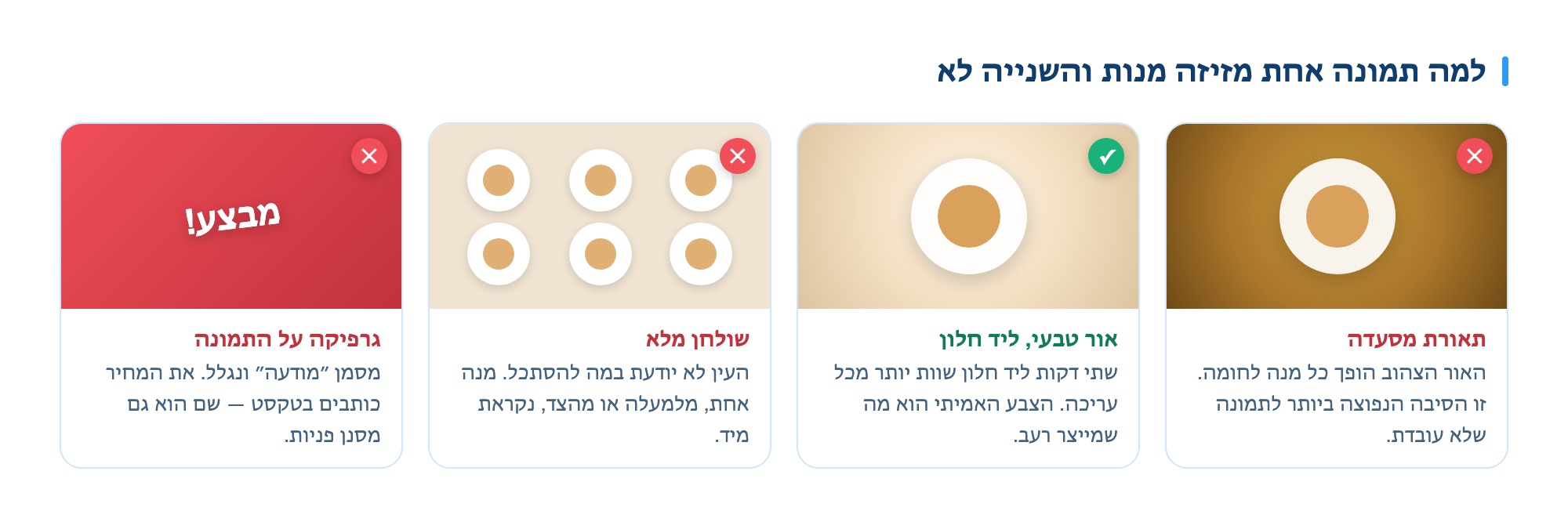
- Natural light, by a window. Yellow restaurant lighting makes every dish look brown. Two minutes by a window are worth more than any editing.
- One dish, from above or the side. Not a full table. The eye needs to know right away what’s on offer.
- No graphics or text on the photo. That signals “ad” and gets skipped. A real photo signals “food”.
- Price in the post, not on the photo. Price in the text filters and brings serious inquiries.
Why this channel is worth your time right now
An order through a delivery app leaves a significant fee with the app, and you don’t get the customer’s details. An order from a local group comes directly, only costs you time, and leaves you with a returning customer.
This doesn’t mean giving up on the apps. It means every direct order is worth more, so it’s worth investing in the channel that brings them. A restaurant posting in ten local groups at the right time builds a crowd that comes back without a middleman.
Four mistakes restaurants keep making
- Posting the full menu. Gets skipped. One dish with a good photo and price works much better.
- Post after 12:00. The lunch decision has already been made. The window is 10:30 to 11:30, and if you miss it, you’re posting for yourself.
- Designed graphic instead of a photo. In a local group, a graphic is immediately seen as an ad. A photo from your kitchen is seen as food.
- Disappearing from the group between promotions. A restaurant that only shows up to sell is seen as an advertiser. Someone who also answers “What’s open on Shabbat” is seen as part of the neighborhood.
How to do it without stopping the kitchen
The daily special should go out at 11:00 to all groups, but that’s exactly when no one is free. Postly lets you take a photo and write once, choose your local groups, and schedule for the same time every day. More: Scheduling Facebook group posts.
Want to fill up lunch orders by morning?
Leave your details and we’ll show you how the daily special goes to all area groups at a set time, without anyone in the kitchen stopping for it.
For a free demo