Facebook Groups or Paid Ads: What Fits Your Business
Paid ads buy time. Groups build trust. This shapes not just your costs, but the type of leads you get and when.
This comparison is usually framed as a budget question, but that’s not the real issue. Each channel offers something different, so they fit different businesses and stages.
The Bottom Line
| Parameter | Groups | Paid |
|---|---|---|
| Money Cost | No media spend | Ongoing daily budget |
| Time Cost | High, needs consistency | Low after setup |
| Speed | Weeks to months | Days |
| Audience Control | Limited to groups you pick | Precise: by age, area, interests |
| Type of Lead | Someone who already knows you | Someone seeing you now |
| What Happens When You Stop | Your presence stays for a while | Stops right away |
| Tracking | Manual: “How did you hear about us?” | Built-in and detailed |
When Groups Win
- When your budget is small or zero. This is the only channel that takes time instead of money.
- When trust matters. Professionals, consultants, insurance agents, therapists. People don’t pick them from a banner.
- When your audience is local. A group of residents in your area is more focused than any geo targeting.
- When questions repeat in your field. “Who knows…” is an opportunity paid ads can’t buy.
- When your product needs explaining. A post that explains something works where an ad gets skipped.
When Paid Wins
- When you need results fast. Launches, stuck inventory, a season ending in two weeks.
- When your time is worth more than money. If an hour of yours is worth more than your daily budget, it’s a simple calculation.
- When you need reach. Groups reach their members. Paid ads reach anyone who fits the target.
- When you need precise tracking. If you need to know the exact cost per lead, groups don’t have this built in.
- For remarketing. People who visited your site but left no details are an audience groups can’t reach.
Why Combining Both Works Better
Businesses that succeed in both channels don’t split the budget. Each gets the role it’s good at. Paid ads create the first exposure. Groups build the trust that makes someone choose you when it’s time to decide.
In practice, it looks like this: someone sees an ad and doesn’t respond, because no one responds the first time. Two weeks later, they see you give a professional answer in the neighborhood group. The third time, when they need the service, your name is already familiar. Neither channel alone would have closed the deal.
By Business Type
General advice is less useful than this breakdown, because what matters is how your customer chooses in your field:
| Business type | What to start with | Why |
|---|---|---|
| Local professional | Groups | "Who knows" is asked daily in the neighborhood group. Paid ads can’t buy that moment. |
| Product store | Paid | A product sells from a photo, and precise targeting is worth more than familiarity. |
| Consultant or therapist | Groups | Chosen by trust. A professional answer does more than any ad. |
| Real estate | Both | The property itself for groups, personal branding for paid ads. |
| Restaurant or café | Groups | Local and consumer groups drive quick, low-cost traffic. |
| National or digital service | Paid | No geographic community to rely on. |
What the First 90 Days Look Like
The wrong expectation is the most common reason for leaving the channel. This is the realistic picture for a business starting with groups:
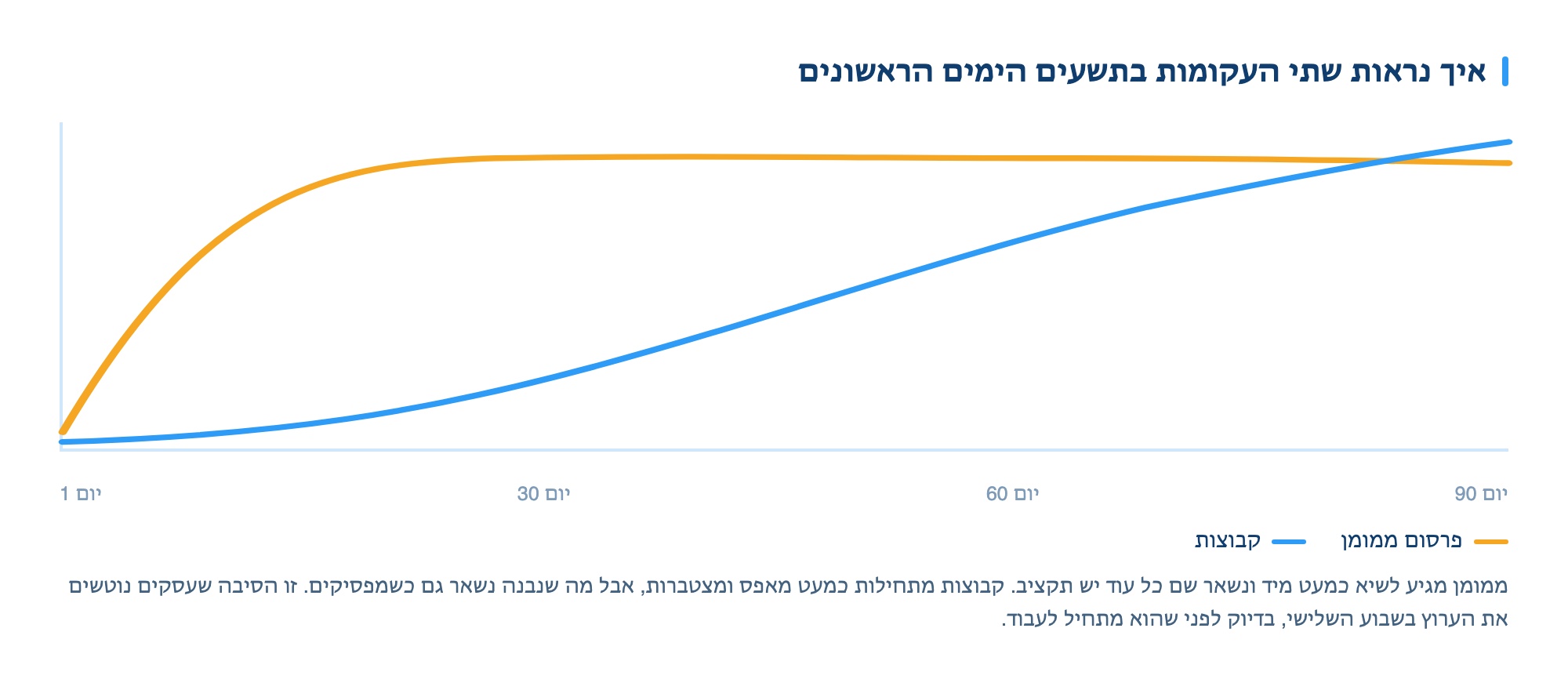
- Weeks 1-2: Setup. Join groups gradually, read the rules, filter. Almost no leads yet, and that’s normal.
- Weeks 3-6: Presence. Answer others’ questions and post weekly value. First leads usually come from one specific group.
- Weeks 7-10: Recognition. People start to recognize your name. Here’s where the difference from paid shows, because leads come in warm.
- Weeks 11-13: Cut down. Now you have enough data to know which four groups work, and drop the rest.
With paid ads the curve is reversed: leads come in the first week, but stop as soon as the budget runs out. That’s the difference between renting visibility and building it.
How to Really Compare Costs
The right comparison isn’t "how much does it cost" but "what’s the cost per lead". Paid ads have this number built in. For groups you need to calculate it manually, and most businesses don’t:
- Count how many hours a month this channel takes. Include writing, posting and replying to comments.
- Multiply by your hourly rate. That’s the real cost, even if not a dollar leaves your account.
- Divide by the number of leads from this channel. You only get this number if you ask each lead where they came from.
- Compare to your paid channel. Now the comparison is real.
For most businesses, the groups number is lower, but only after the second month. In the first month it’s almost always bad, because the effort is there but results aren’t yet. That’s why so many businesses quit the channel right before it starts working.
If time is the obstacle, this is exactly what a group posting tool shortens. It doesn’t change your message, but it cuts distribution from an hour to minutes.
Want to see how long it really takes?
Leave your details and we’ll show you a real posting run on a list of groups relevant to your field.
For a free demo